Designing Future-Ready Workflows: Seamless AI Collaboration
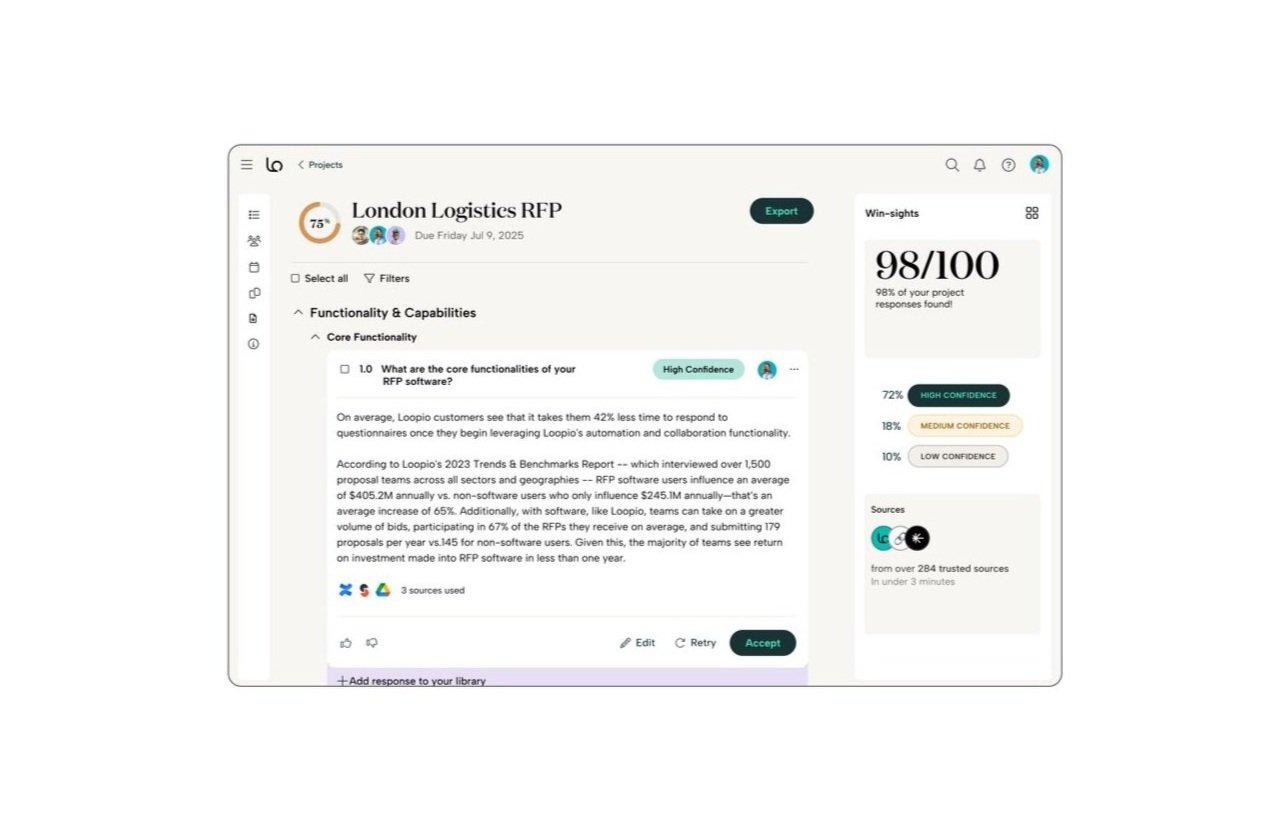
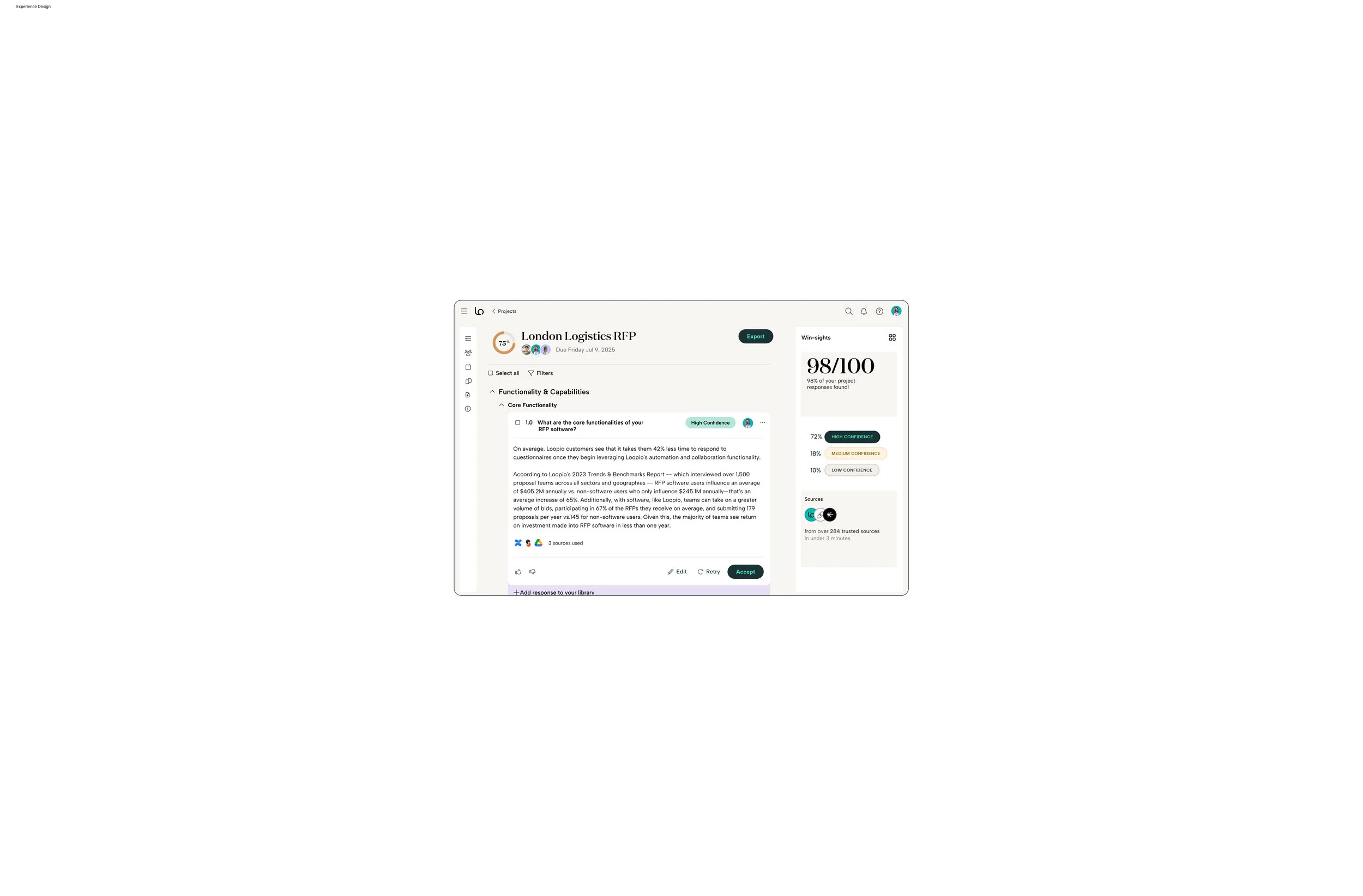
I led the design of a system of trust indicators, starting with a Confidence Score, to increase adoption of AI-generated answers in enterprise workflows. Through research, competitive analysis, and cross-functional workshops, we identified five key answer qualities and introduced natural language explanations users could rely on. This shift toward interpretable trust led to higher user confidence, reduced rework, and improved adoption of AI tools across the platform.
Company: Loopio Role: Design Lead Project Length: 1 month
Problem
Loopio had long been a leader in user experience, but recent years of Sales-led development left the platform cluttered with complex workflows and edge-case features that diluted the core authoring experience.
As we began exploring AI-powered workflows and agentic patterns, we saw a clear opportunity to reset and refocus the product experience:
UX had fallen behind: Years of prioritizing Sales-driven features introduced complexity that compromised ease of use and design cohesion.
AI reduced the need for complexity: Many legacy workflows could be simplified—or removed entirely—by leveraging intelligent agents and automation.
Focus could return to core user needs: Streamlined workflows could prioritize clarity, flow, and focus, with advanced functionality layered in through progressive disclosure.
AI patterns became design tools: Emerging interaction patterns (e.g., suggestion, auto-complete, task orchestration) allowed us to build more focused and supportive experiences.
The challenge: reimagine Loopio’s authoring workflows for an AI-first future—balancing power and simplicity, and designing experiences that let AI do the heavy lifting while keeping users in control.
Envisioning the Ideal Experience
To set a strong foundation for the future of Loopio, the design team ran a collaborative workshop to explore what our ideal platform could look and feel like in an AI-powered world.
We began by reimagining the platform from the ground up—not constrained by existing systems or features, but guided by user needs and new opportunities for focus and automation.
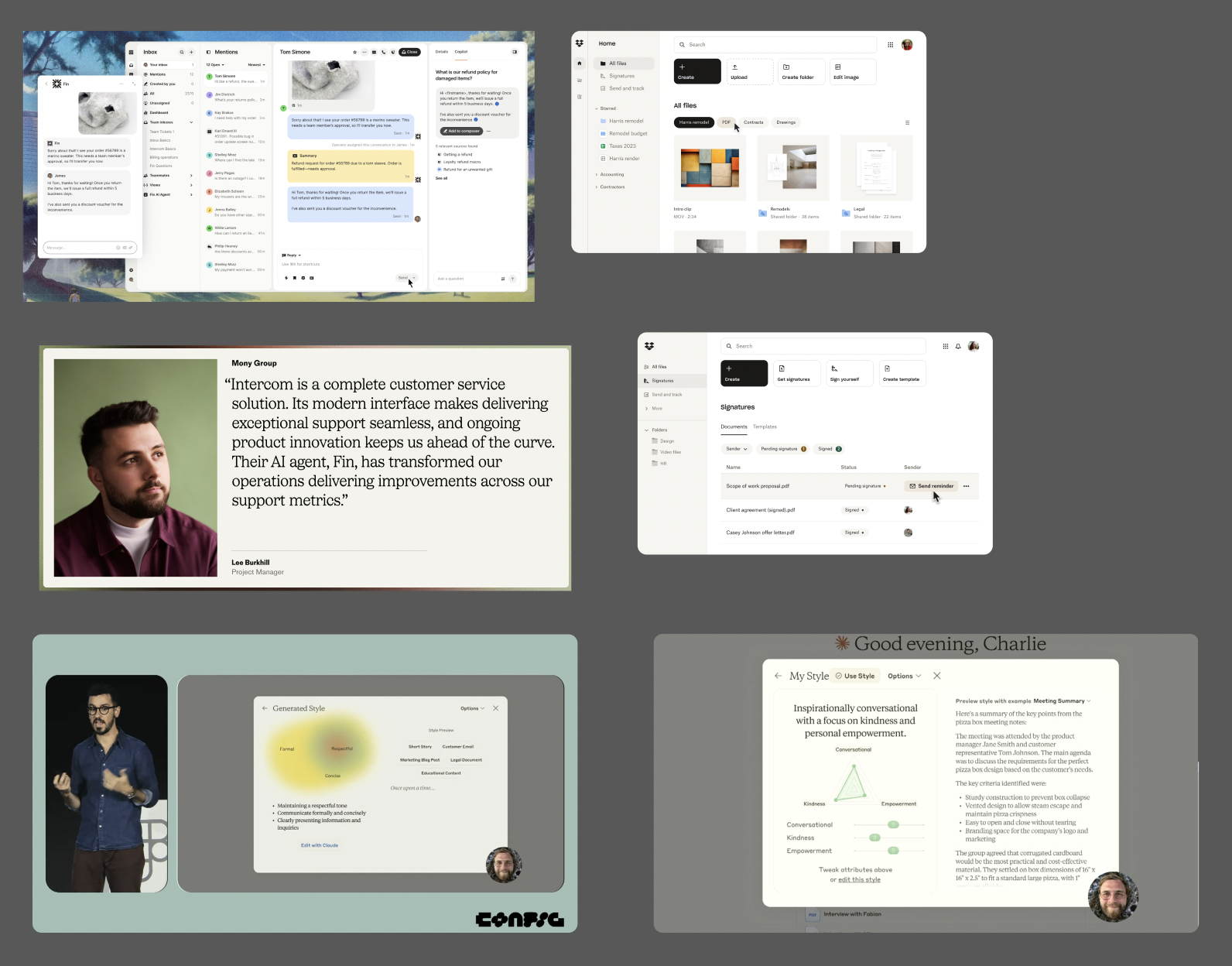
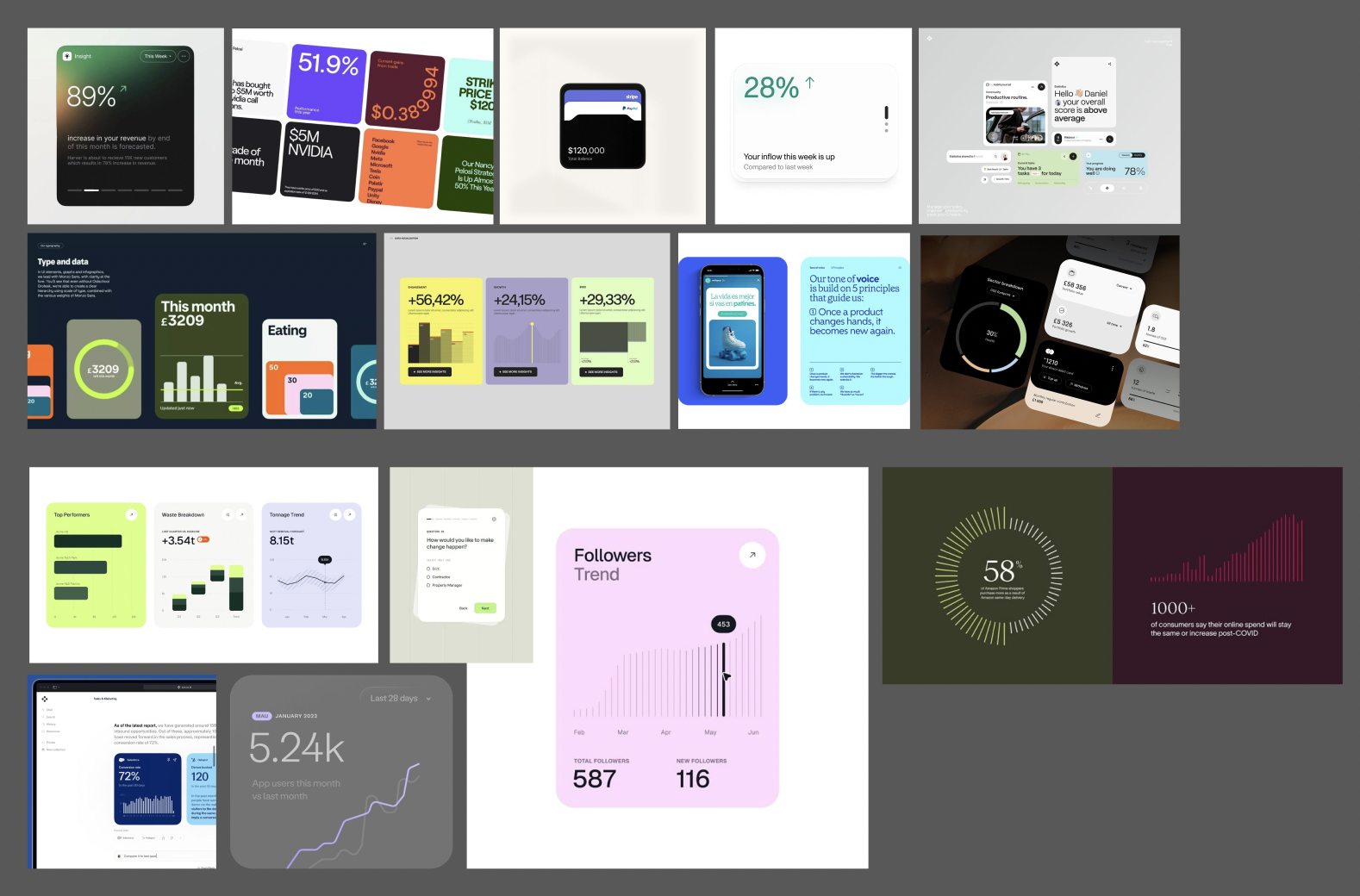
The team explored a wide range of visual directions—from illustration styles and photography to typography, layout, and use of color.
Through discussion and iteration, we landed on a central metaphor: an airport lounge. In the same way a lounge offers calm and clarity amid the chaos of travel, we wanted Loopio to feel like a quiet, grounded space in the high-pressure world of proposal work.
This metaphor helped us define our aesthetic direction:
Neutral, calming color palettes that allow users to focus, with bold colors reserved for highlighting key actions or AI-generated content.
A mix of serif and sans-serif typefaces, blending clarity with a sense of editorial sophistication—bringing warmth and authority to an otherwise utilitarian space.
Minimal, clean layouts that reduce cognitive load and make complex tasks feel simpler.
A visual tone that reflects professionalism, focus, and trust, aligning with the high-stakes nature of our users' work.
This vision guided the next phase of AI integration—ensuring that the interface could support complex intelligence while feeling clear, calm, and human-centered.
Identifying Opportunities for Agentic AI
With our future-facing vision in place, the next step was to deeply assess Loopio’s current workflows and user pain points—and explore how agentic AI could meaningfully enhance or reimagine them.
We examined the end-to-end proposal process, identifying where users were spending the most time and encountering friction.
At the same time, internal conversations around agentic AI were accelerating. This new paradigm—where AI doesn’t just assist, but actively takes on tasks within clear boundaries—fit naturally with Loopio’s collaborative, multi-step workflows.
Proposal creation often involves multiple roles and responsibilities:
Someone importing and structuring RFPs,
Others finding the right content,
Team members conducting competitive research,
And still others editing and refining the final output.
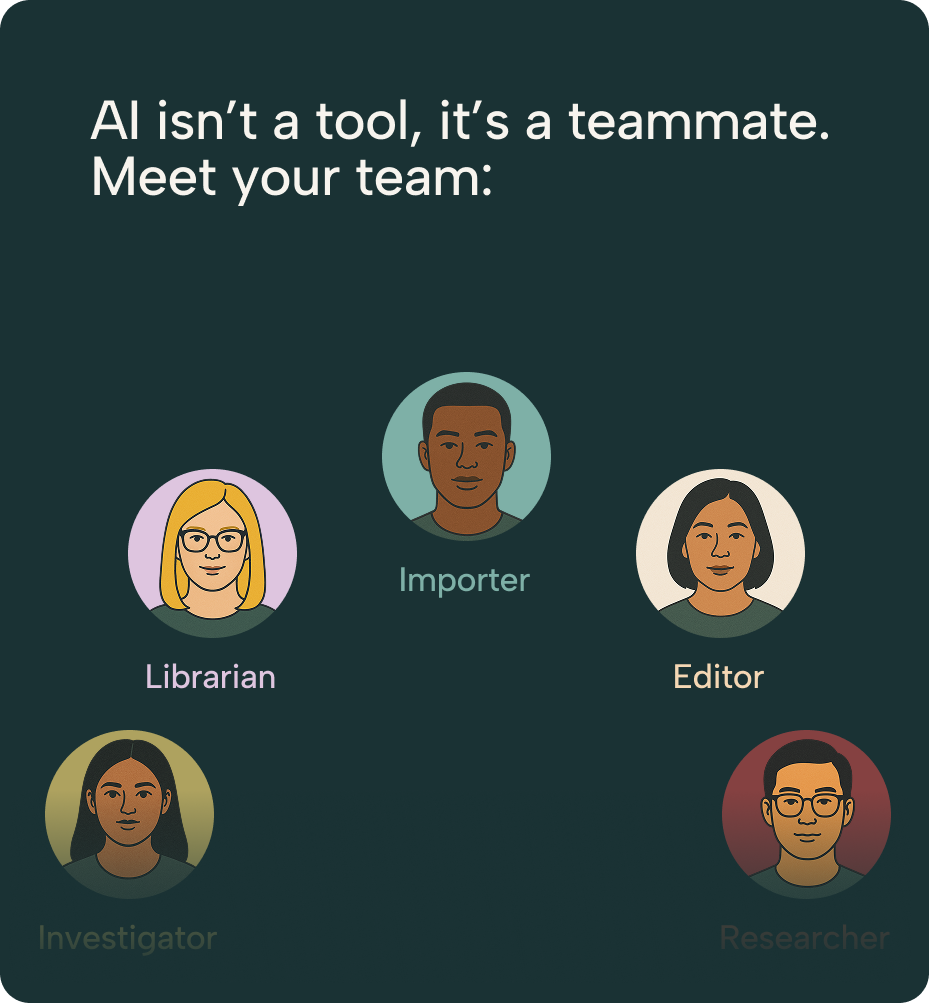
This led us to a system of AI “companions”—specialized agents that mirror these human roles and assist users in specific tasks:
The Importer – prepares and structures incoming documents
The Librarian – finds, recommends, and manages relevant content
The Editor – polishes and adapts content for clarity and tone
The Researcher – surfaces supporting data or insights
The Investigator – digs into source material or answers nuanced questions
To focus our efforts, we narrowed in on the Importer and Librarian. These two roles map directly to Loopio’s most critical and pain-prone workflows—where automation and intelligence could drive the greatest impact for users.
Bringing the Vision to Life: From Concept to Full Platform Reimagination
With the agentic AI model and visual direction in place, I began translating our ideas into tangible design concepts—starting with a reimagined “Writer’s Desk” layout.
The goal was to create a focused, intelligent workspace—a calm space where users could do deep, high-value work with AI as a supportive partner in the background.
I designed an initial layout that anchored the user in a central workspace, surrounded by helpful AI assistants (like the Librarian or Importer) that could surface content, answer questions, or take action with minimal friction.
We shared this vision across the design and product org, and it immediately sparked internal excitement—especially around the clarity, calm, and future-readiness of the experience.
Building on that momentum, I began experimenting with how this visual and interaction model could extend into Loopio’s core workflows:
Importing Documents: Transformed from a clunky, manual process into a one-click import flow powered by the Importer AI companion. Users now receive real-time insights during upload—like formatting issues or missing sections—making the process faster, cleaner, and more informed.
Building and Enriching Your Library: The Librarian surfaces trusted answers and proactively suggests tools like Build Your Library, Update Entry, and Review Responses—turning live project work into high-quality, reusable content with minimal user effort.
Analyzing New Bids: Introduced a smart Bid Analyzer experience, powered by the Investigator, that provides a quick summary of the opportunity—win themes, key milestones, client history, and an estimated win rate—to support confident, data-backed go/no-go decisions.
Around this time, Product senior leadership asked if we could share this new direction at the upcoming board meeting. In response, I rapidly evolved the early concepts into high-fidelity, end-to-end flows over the course of a week—showcasing how agentic AI and thoughtful UX could reshape the platform for the next era of proposal work
Next Steps
With strong buy-in from the product team, leadership, and the board, the next phase is focused on moving from concept to implementation—thoughtfully and iteratively. Our approach is grounded in usability, feasibility, and long-term platform impact.
Prioritize where to start: Identify high-impact workflows—especially net-new ones where customer expectations are still forming—as early candidates for agentic AI integration.
Usability testing at each phase: Test and validate these AI-powered workflows with real users to refine interactions, clarify roles, and ensure trust and control are maintained.
Scale the companion model: Expand the agentic framework to other areas of the platform, adapting roles or introducing new ones as needed (e.g., Reviewer, Strategist, Approver).
Componentize the design system: Break down and codify the new design patterns and behaviors introduced in the concepts to ensure consistency and scalability across the platform.
Cross-functional rollout planning: Work with Product, Engineering, and GTM teams to build a phased roadmap that balances customer value, technical feasibility, and risk.